Series The Quiet Season
Most of the year, a Michigan field has too much information in it to see clearly. The grass softens the ground, the leaves screen the buildings, the summer growth fills in the spaces where things have failed or stopped. By August, a half-fallen springhouse can be almost invisible from the road. A fence line goes weedy and reads as a hedgerow. The work of decay continues, but quietly, beneath a green agreement to look away.
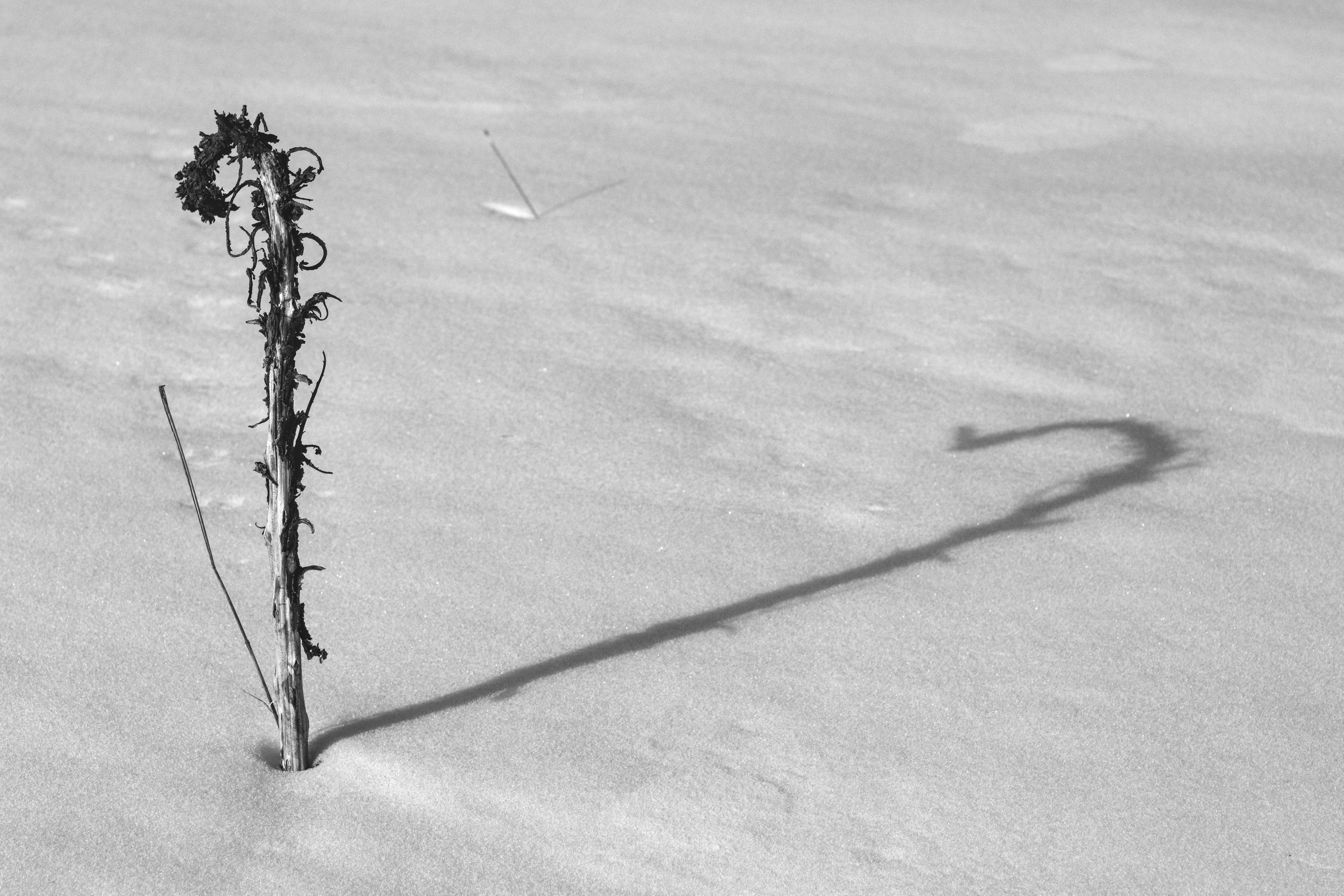
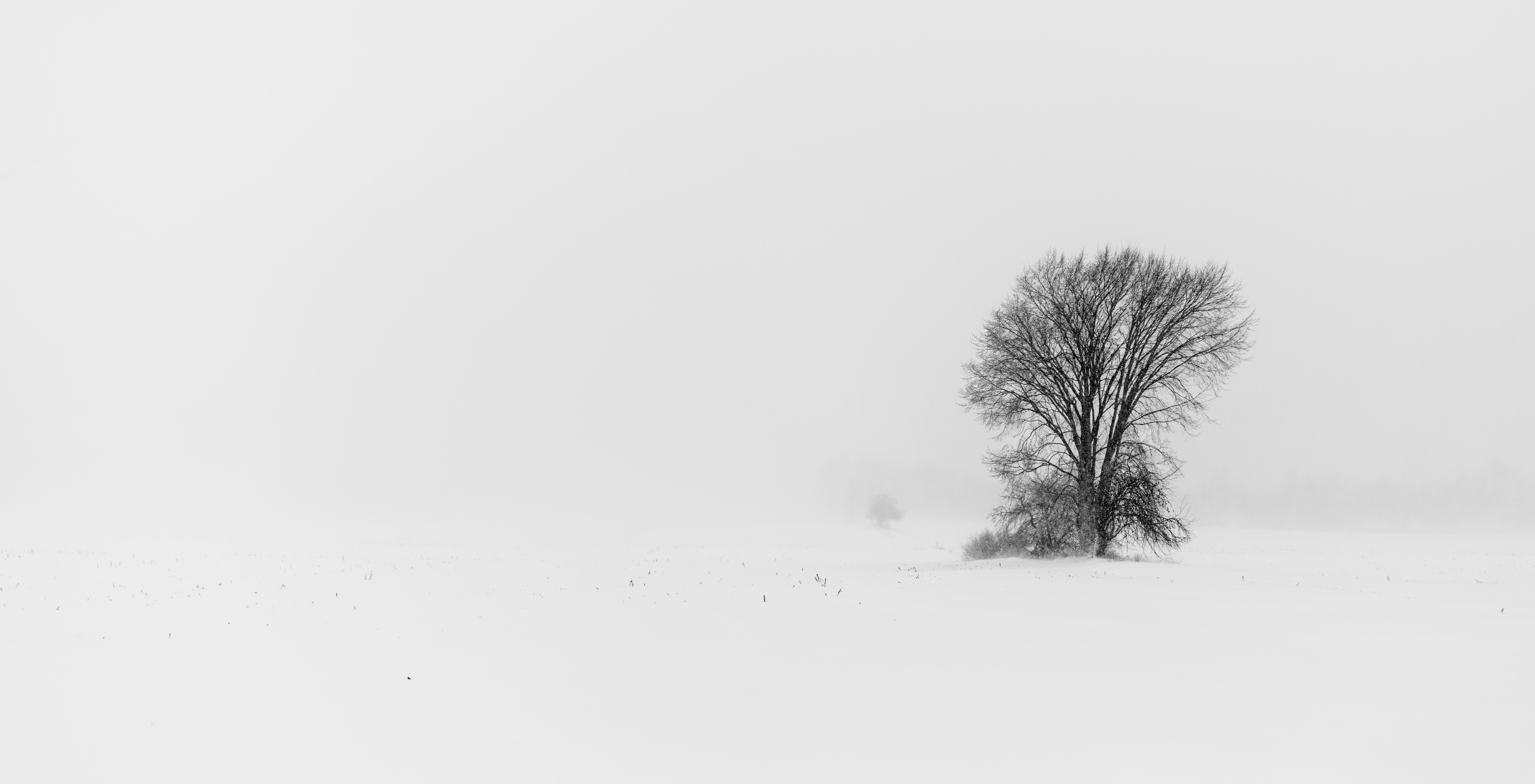
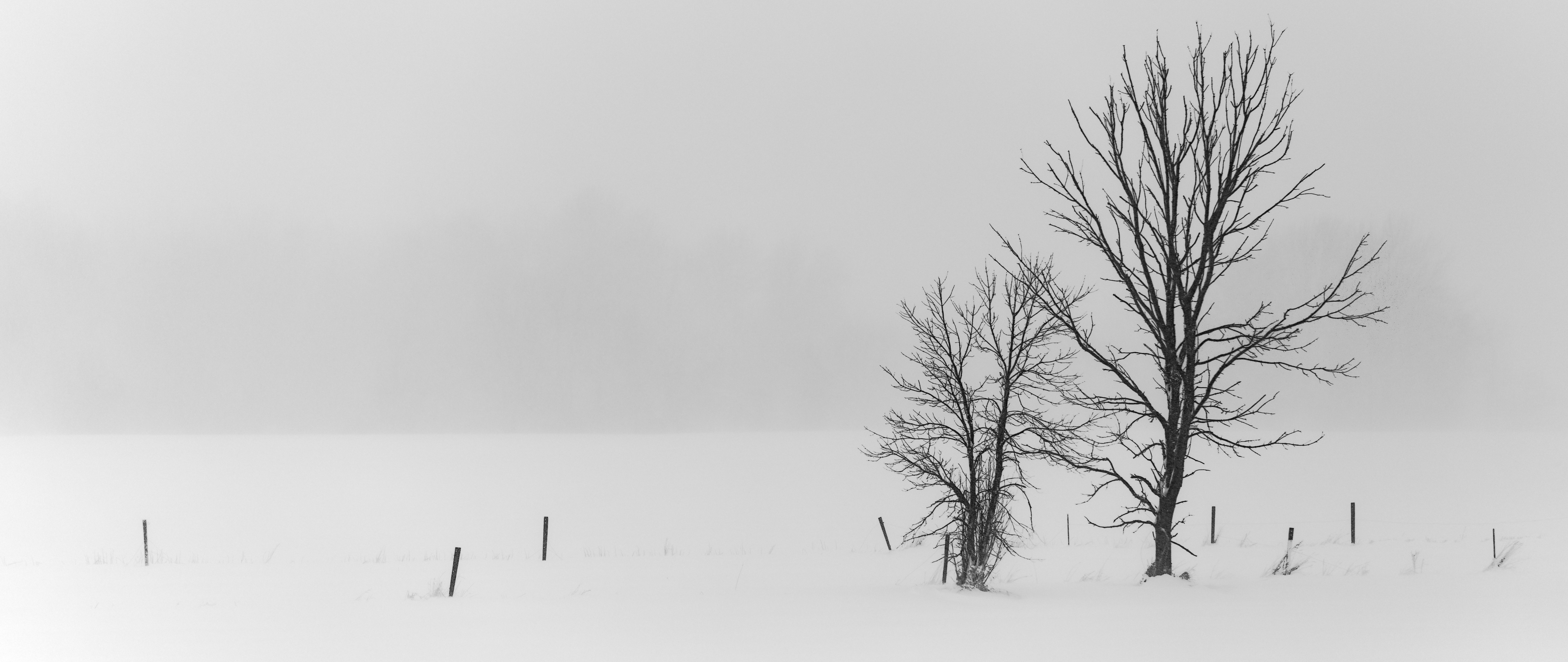
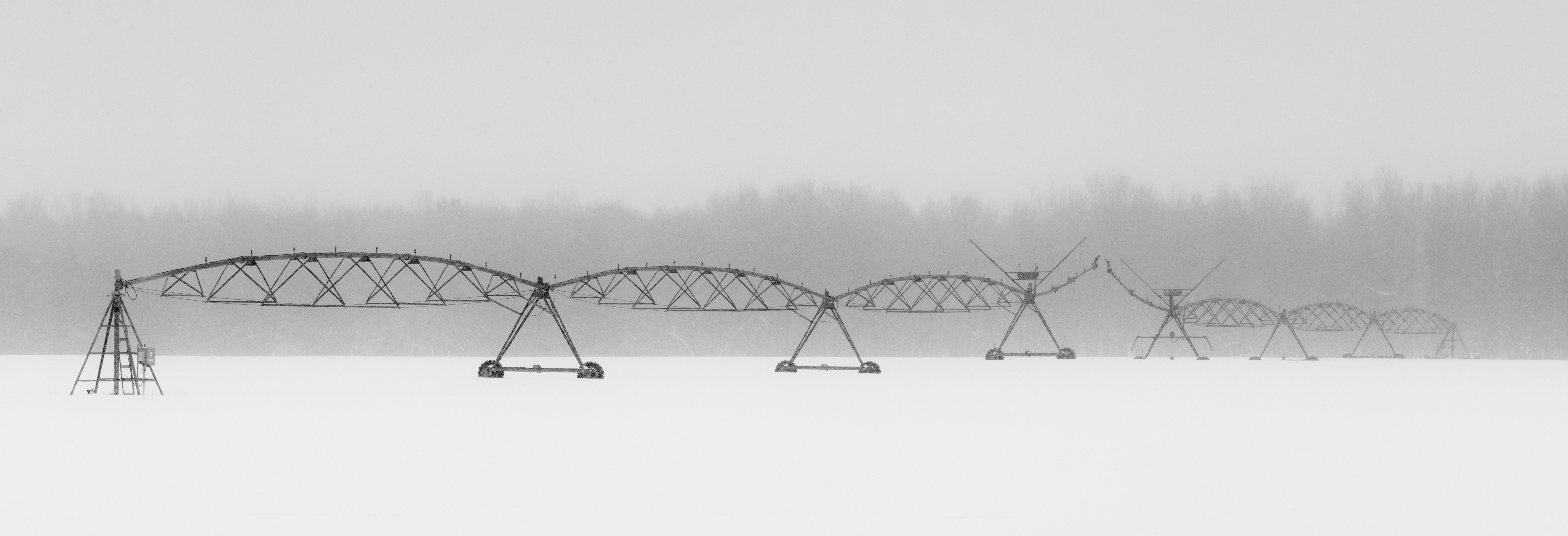
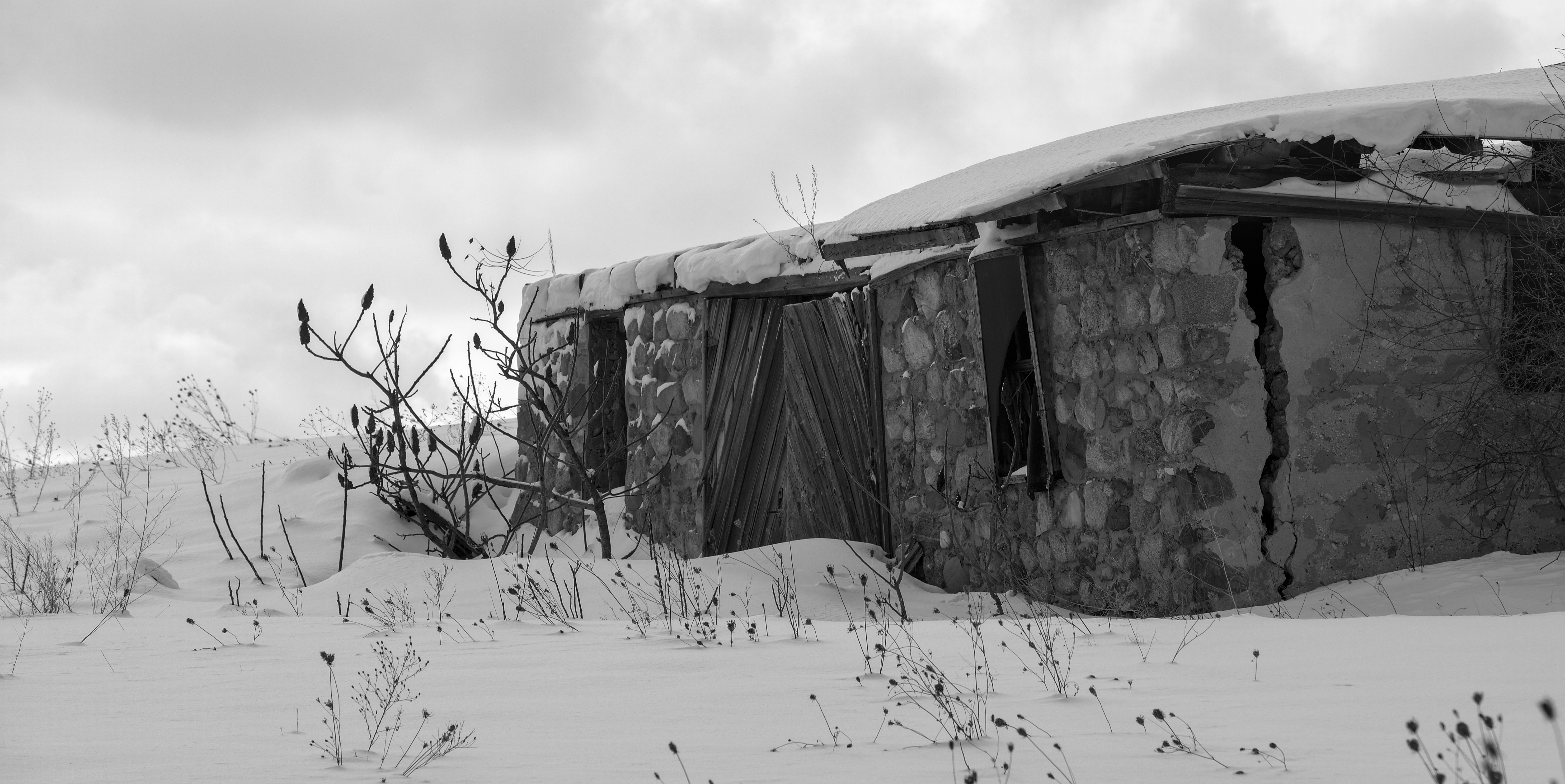
The Quiet Season is what's left when that agreement ends. Snow strips the softening details and leaves the bones - the stalk, the fence, the irrigation rig, the barn, the stone wall losing its argument with gravity, the silo whose farm has gone. Each of the eight photographs in this series is a portrait of something standing in a season that asks nothing of it, made on quiet roads in west Michigan over the course of one winter.
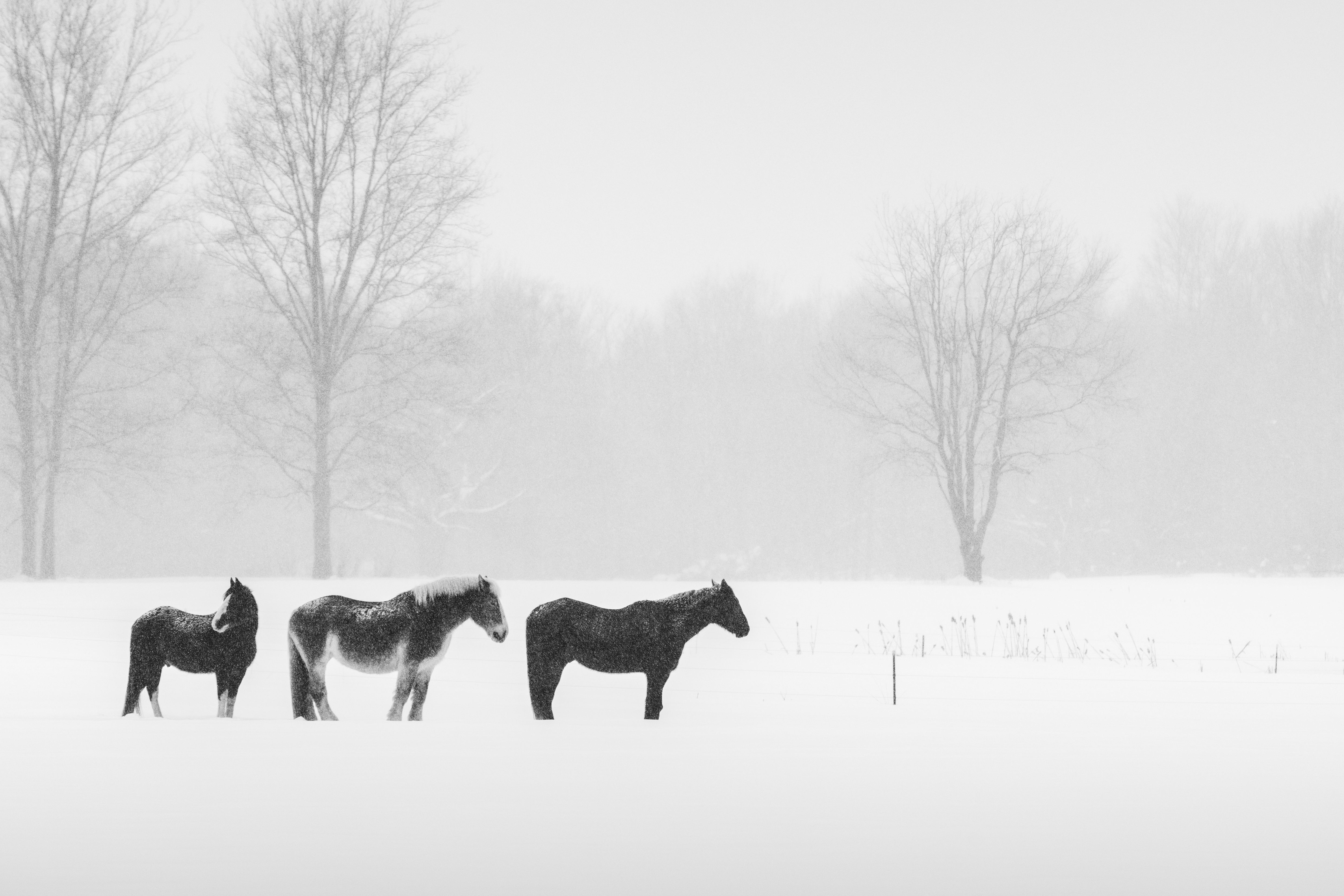
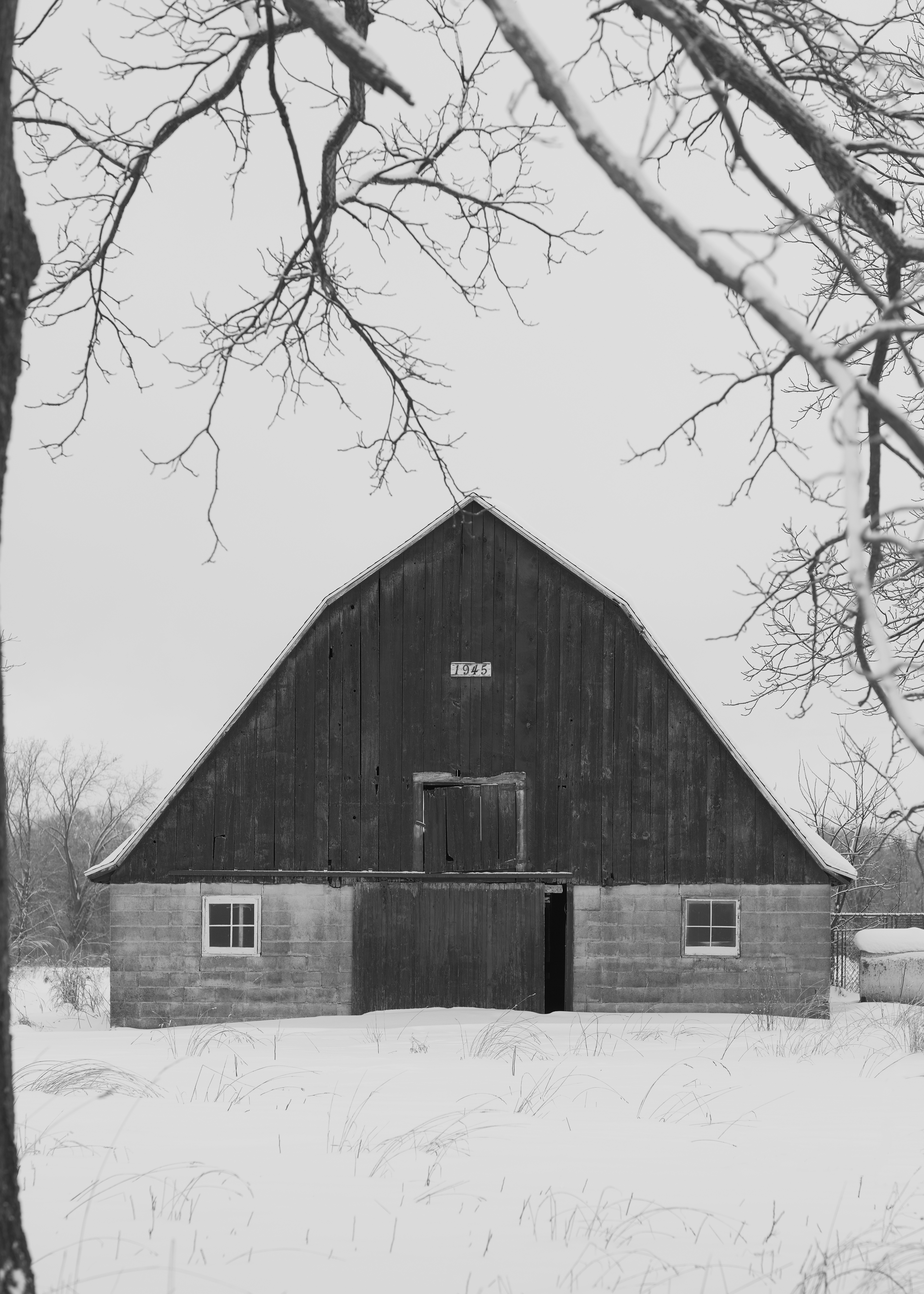
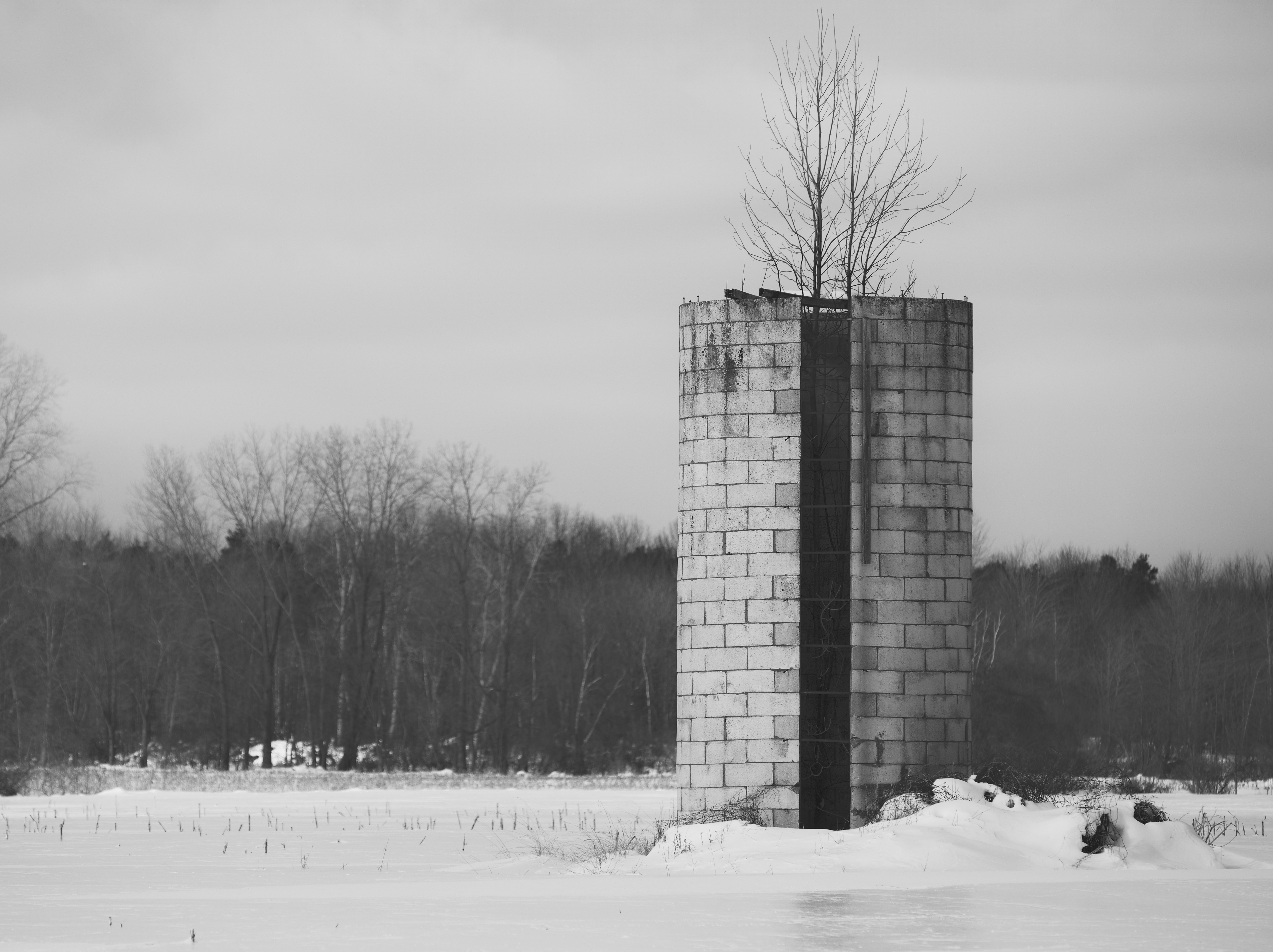
What I kept finding, frame after frame, was a particular kind of persistence. A dried plant that has no functional reason to remain still casts a shadow across the snow. A fence keeps marking a boundary no one is contesting. Two irrigation rigs hold their stance against each other across an empty field. Three horses stand in a blizzard because their bodies are built for it, and one of them looks back over his shoulder, half-deciding. A barn carries its date forward eighty years past the year that needed carrying. A silo outlives its barn, its farm, and its purpose, and gives a tree a place to grow.
The series is not really about winter. The snow is only the medium that lets you see clearly. What the series is about is what stays standing after the reason for standing has gone - and what new thing might find a place to grow there.
The eight photographs were made between December 2025 and February 2026, printed in my home studio in large format on fine art papers with archival pigment inks rated for over two centuries of stability under proper display conditions. Editing is minimal. The work is mostly about what was in front of the camera at the moment the shutter opened.